

oy is often mistaken for luck. But joy is not something reserved for the fortunate few. Research and lived experience show that joy can be cultivated through intentional choices, everyday practices, and new perspectives. Leaders who intentionally create moments of joy strengthen resilience, clarity, and connection for themselves and across their teams and organizations. Joy in leadership is the practice of intentionally cultivating perspective, connection, and meaning rather than waiting for circumstances to improve.
When We Talk About Luck on St. Patrick’s Day
Every March, St. Patrick’s Day brings a familiar phrase back into conversation: the luck of the Irish.
We celebrate with symbols of good fortune — four-leaf clovers, rainbows, and pots of gold. Luck becomes the story.
But when it comes to joy, luck has very little to do with it.
Joy isn’t something reserved for a fortunate few. It’s something we actively create.
As I wrote in The Joyful Leader®, joy isn’t something you have to wait for. It’s something you can pursue.
And often, the path toward joy begins with something much simpler than we expect.
The simplicity of building a joy-filled life is based on the little things we do that are within our span of control.
Joy lives inside the small choices we make every day.
Joy Is Built in the Small Moments of Leadership
Many people imagine joy as a large emotional experience, something dramatic or life-changing.
But most joy enters our lives quietly.
A conversation that leaves you energized.
A moment of laughter with someone you trust.
A pause that allows your mind to reset.
As I often remind leaders, it’s the simple things that bring joy into our lives.
Psychological research supports this idea. Studies show that intentional positive practices, such as gratitude, connection, and reflection, can increase well‑being and resilience over time. Research published in Psychology Today explores how intentional habits and perspectives influence our emotional experiences. A meaningful portion of our emotional life is not determined by luck but is instead shaped by the choices we make every day. Joy is something we participate in creating, and we have far more influence over our emotional experience than we sometimes believe.
Joy Connects Us to Something Deeper
Joy is not simply a pleasant feeling. It’s a stabilizing force. In The Joyful Leader®, I describe it this way:
Joy transcends immediate circumstances, connecting us with a deeper sense of purpose and self-awareness.
When leaders cultivate joy, they develop an internal place they can return to — even in difficult moments.
Joy gives you a place you can go, a place you always have within you and can take anywhere.
This matters deeply in leadership. Joy in leadership shapes how teams experience trust, stability, and connection. Because leadership often requires navigating pressure, uncertainty, and competing expectations.
Joy creates emotional steadiness. And that steadiness allows leaders to show up more fully for the people they serve.
Joy helps us show up as the best leaders for our teams.
Happiness Versus Joy
Entrepreneur Jeff Hoffman once said something that stayed with me:
“Happiness is a decision.”
Nonprofit founder Lizza Rossi takes that idea a step further by distinguishing between happiness and joy:
“Happiness is often tied to circumstances. Joy is deeper.”
Joy becomes a way of relating to life, even when things are difficult.
Joy is less fragile.
Joy is less dependent on external outcomes.
And because of that, joy is a powerful resilience resource.
Canceling the Noise
Environmental educator Thomas Easley describes something many leaders struggle with:
The constant noise of responsibility.
Deadlines.
Decisions.
Expectations.
Sometimes the most important leadership move is simply stepping back long enough to hear yourself think.
When the noise quiets, clarity returns.
And often, joy returns with it.
The Joy Menu: Creating Your Own Good Fortune
One of the tools I introduce in The Joyful Leader® is something I call The Joy Menu®. Most leaders plan their meetings, budgets, and strategies. Very few plan for joy.
The Joy Menu® is exactly what it sounds like, a personal list of small experiences that reliably restore your energy and perspective:
- A few minutes outside
- Music that shifts your mood
- Tea in a quiet moment
- Movement
- Conversation
These are not luxuries. They are leadership resources. Because when leaders reconnect with joy, their teams often feel the difference immediately.
A Personal Story About Luck
A few years ago, I had an experience that perfectly illustrates the difference between luck and joy through connection. While traveling in England, I visited one of the historic estates used as a filming location for “Downton Abbey.”
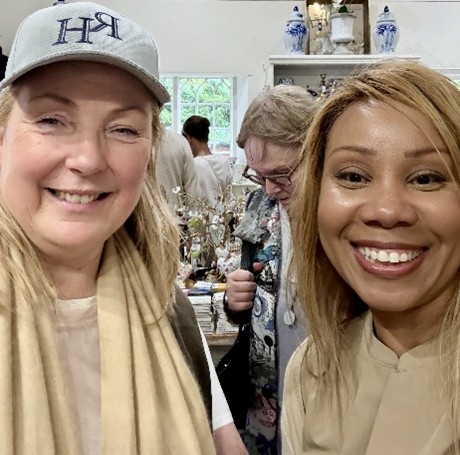
During the visit, I struck up a conversation with another guest. We talked about speaking, leadership, and our work. It was an easy conversation. Nothing remarkable at first.
Later, I learned something surprising. The woman I had been speaking with was Lady Fiona Carnarvon, the 8th Countess of Carnarvon and the manager of Highclere Castle. What began as a simple conversation turned into a memorable moment, not because of luck but because of openness. Moments like that remind me of something important: What people often call luck is frequently the result of showing up, engaging, and being present in the moment.
The same principle applies to joy. Joy doesn’t appear because fortune favors us. Joy appears because we remain open enough to notice.
Expanding Capacity Without Losing Yourself
There’s a pattern I see often in high-achieving leaders: When things become more difficult, they become quieter. They take on more. They ask for less. They tell themselves they can handle it. And often they can.
But resilience is not silent endurance. Resilience is discernment:
- Knowing when to stretch
- Knowing when to delegate
- Knowing when something is heavier than it looks
The leaders who last are not the ones who carry everything. They are the ones who remain connected to themselves. Joy helps them do that.
What I Learned About Luck in Scotland
For many years growing up, I believed my family heritage was Irish. St. Patrick’s Day always carried a small sense of identity for me. Later in life, I visited Scotland and discovered something surprising.
Through conversations and family research, I learned that my heritage is actually Scottish, not Irish. When I mentioned this to a few people there, they smiled and said something I will never forget:
“It doesn’t really matter. Most of us are mixed heritage anyway.”
That comment was comforting. What matters most is not where we come from. It’s who we choose to be.
DNA can tell us where our story began.
But it does not determine how we show up in the world.
Joy works the same way.
Joy is not determined by luck.
Joy is shaped by the way we choose to live.
The Real Fortune
St. Patrick’s Day celebrates luck. But leadership is not built on luck. It’s built on awareness, intentional choices, and recognizing that joy is not something we wait for but something we pursue.
And sometimes, something as simple as noticing a moment of joy is the beginning of a much larger shift. Maybe the real luck isn’t finding a four-leaf clover. Maybe it’s recognizing that joy has been within reach all along.
Keep choosing joy.
If you are exploring how joy can strengthen resilience and leadership capacity, you can learn more in my book:
Organizations can also explore how Keane Insights integrates joy, resilience, and leadership performance through our keynote programs, leadership workshops, and the The Joyful Leader® Resilience System which included the What’s Your Sphere of Resilience® assessment.