
Nobody Builds Resilience Alone
Networking builds leadership resilience because relationships are external resources we can draw on when our internal ones run low. Leaders with strong professional and social networks recover faster from setbacks because they built their support system before they need it.
The Panel I Didn’t Ask For
I found out I was a connector because somebody else noticed first.
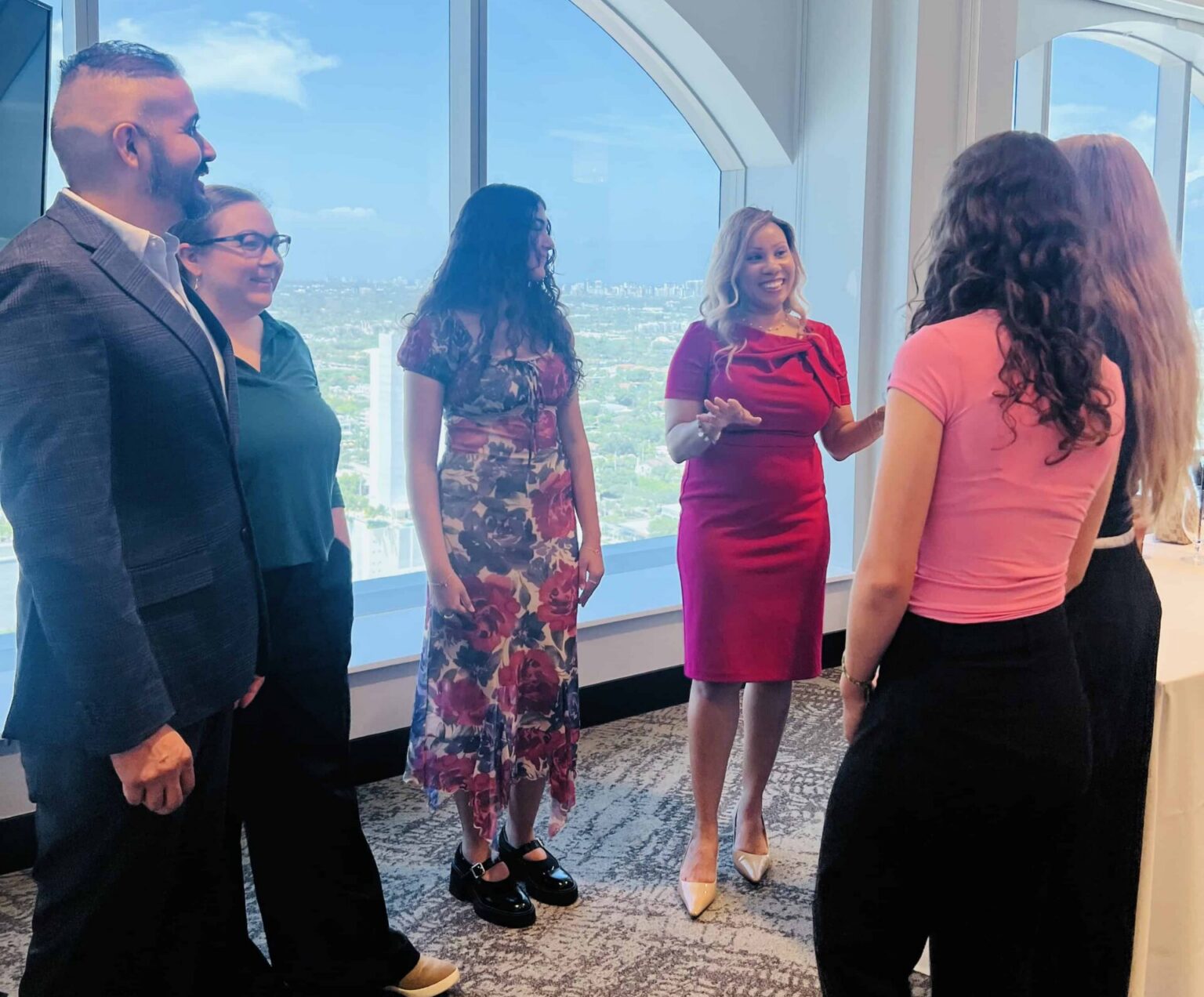
The president of the Diversity Alliance for Science invited me to speak and moderate a panel at the 2024 East Coast Conference. The session was called “Turning Connections into Business Opportunities.” She’d watched how I moved through rooms full of corporate leaders and entrepreneurs, and she named something I’d never named for myself. That invitation came from a way of being that I thought was just how I spoke with people.
That’s the part we don’t discuss when we talk about networking. We think we’re building a contact list. We’re actually building a reputation that walks into rooms ahead of us.
Networking Is External Resilience
In The Joyful Leader®, resilience splits into two categories: internal and external. Internal resilience is what we control, including our mindset, our emotional regulation, and our problem-solving. External resilience is what we control less, which is precisely why we have to build it on purpose.
Social resilience and professional resilience both sit on the external side of What’s Your Sphere of Resilience®. Social resilience asks whether we have close, secure relationships and whether we know where to turn for support. Professional resilience asks whether we’ve adapted successfully to change in our careers and whether we enjoy the people we work with.
Networking strengthens both. Networking is how we stock the shelves before the storm.
After attending the Tuck School of Business program, I understood this more clearly than ever. I realized the importance of actively engaging in communities where my skills and expertise add value to others while also supporting my own growth.
A network supports us in our time of need because we’ve already built relationships of trust, and others trust us enough to turn to us when they need support, too.
It comes full circle.
Why wouldn’t we want to be around people who win when we win and get excited for us just as much as we get excited for them? At its best, networking moves us beyond seeing one another as competition. We become allies, resources, and collaborators. They win. We win. And the clients and communities we serve win.
Not Casual Interactions
In the world of business, connections aren’t just casual interactions; they’re the building blocks of opportunity. Every conversation is a small deposit into an account we may need to draw on years later, usually on a day we didn’t see coming.
Adam Grant’s research on reciprocity styles found that the people who give first, without tracking the return, build the most durable networks of all. Barbara Fredrickson’s broaden-and-build theory says something related and lovely: Positive emotions don’t just feel good in the moment; they expand what we notice and build lasting social resources. Joy, in other words, is part of the engineering.
What’s Keeping Us From Networking?
For most of us, it’s a time factor. With everything we juggle, building relationships just doesn’t seem that important among all our other priorities. Many think they’re wasting time if they’re being social and chatting.
That was me.
I thought I didn’t have enough time. I needed to stay at my computer, building the next program, writing the next article, preparing the next presentation. That felt like the work. But when I started intentionally spending more time around like-minded people, I began to see that connection was part of the work. Giving ourselves time to connect with others, understand their pain points, learn, and ask questions is often where growth begins.
A fixed mindset stops a lot of people from creating relationships. With that mentality, we think things like, I’m doing my work. I’m busy. Stop coming over to my desk and talking to me. Or we say, “I did say I have an open-door policy, but we’ve got stuff to do.”
Maybe that’s you, sitting there rolling your eyes. But we have to honor the fact that at some point, relationships matter.
The Bridge Toward Trust
A study on happiness at work found that the two most prevalent causes of employees having bad days at work are a lack of help and support and a lack of praise or recognition for their work. Look at both of those closely. Neither one is a workload problem. Both are relationship problems.
The upside is just as measurable. Gallup found that organizations with engaged employees dramatically outperform those without, with far less absenteeism and meaningfully lower turnover. And Paul Zak’s research on the neuroscience of trust found that people in high-trust workplaces report 74 percent less stress and 106 percent more energy. Connection isn’t a nice feeling. Connection is a measurable resource.
When people trust us, they often become our career advocates. They speak highly of us and seek us out when there are new opportunities or when they need our expertise. The bridge towards trust is connection, and it’s a beautiful thing.
Josh Landay, executive director of Gifted Savings, said it this way when we spoke: “I believe in the power of building strong, authentic relationships, with teammates, board members, and partners, to strengthen our pursuit of a clear and unified vision.”
I’ve watched that bridge form in my own business.
I reconnected with a former colleague on LinkedIn, and she introduced me to a speaker and board member of a healthcare association because she thought we had a lot in common. I connected with him and learned from his experience as a speaker and executive coach. He encouraged me to join the association and submit proposals.
And I joined. I attended my first in-person engagement. And now I’m in conversations about presenting to the association’s leadership team.
None of that began with a pitch. It began with one relationship, which led to another relationship, which led to another opportunity.
Fifteen Minutes at a Time
Here’s the practice that changed my career: When I saw someone doing something interesting or someone I wanted to learn from, I asked for 15 minutes on their calendar. That’s the 15-Minute Calendar Strategy®, and it’s small enough that nobody says no.
Karélix Alicea, founder and president of Lotus Behavioral Interventions, tested it and told me why it works: “I definitely see the value in networking and in just 15 minutes; that way, you don’t feel like you’re asking for so much.” She also said something I’ve carried since: “Forming relationships and dealing with change is a given.”
The other half of the practice is the part people skip. For every 15 minutes I received, I made it a goal to give 15 minutes to someone else. Think of it like a checking account. If we take money out, it’s time to put a deposit back in.
Nadya’s Reintroduction
I’ve mentored a number of mental health clinicians over the years, and Nadya Maree is one of them. When she was going after a role she wanted, I told her to reach out to people and remind them of something she’d done for them, something they’d been part of.
So she did. She went back to all of them and asked, “Hey, do you remember me?” and “Can we schedule 15 minutes on your calendar to talk about this role that I’m interested in?”
Here’s what she told me happened next: “Folks did say, ‘Oh my gosh, I remember that.’ And when I finally got my interview, the response was, ‘I have heard so much about you.'”
She didn’t build that network in the moment she needed it. She built it years earlier and then went back to it.
Communal Resilience
Communal resilience is about fostering close, secure relationships within our community, spending quality time with others outside of work, and strengthening our social network. Lizza Rossi, founder of the Ekukhanyeni Relief Project, told me communal resilience matters most of all: “It’s not just about tangible support; it’s about a deeper, spiritual buy-in. When people truly understand the energy and authenticity behind what you do, their support becomes more meaningful and impactful.”
That’s the difference between having contacts and having a community. Contacts answer emails. A community shows up.
Sometimes the question is simply, Where do I find that community?
Start in your own backyard.
I joined national associations with local chapters in the industries I want to serve. I also joined local organizations that could help me grow personally and professionally. After Tuck, an alumna referred me to a Miami-based consulting program, and my coach there encouraged me to join a local chamber. I did, and I started attending the in-person events that aligned with my business. The ambassador I was paired with turned out to be someone I’d already met months earlier through the Women’s Executive Club. Through these communities, I’ve met women who are also supporting organizations that expand children’s access to the arts and raise funds for cancer research.
I’ve gained business relationships and personal relationships, all because I stepped outside of the house and started connecting with people.
Start Simple
Networking can be as simple as this:
- Strike up a conversation with someone.
- Focus on who they are.
- Make sure they have a good sense of who you are.
- Note how to stay connected with them.
- Determine how you can be helpful to them.
That’s it. Five steps, and the fifth one is the one that makes the first four stick.
No pitching. Show up. Get curious. Be kind. Learn what matters to people and look for ways to be useful. You may be surprised by what comes from those relationships, sometimes quickly and sometimes years later.
August is our month for designing our sphere of influence, and networking is where that design begins. We’re in the Set stage of Ready, Set, Go®, which is the stage where we build the landscape before we need it to hold weight.
Sometimes designing that landscape requires us to look at where our time is actually going and ask whether those choices are serving us and allowing us to be at our best. Then we can chart the path forward and follow the flow.
So maybe the question isn’t only, What’s keeping me from networking?
Maybe it’s this: Am I in the right flow for my life?
Because if we don’t design our network, someone else designs it for us. Usually by accident, and usually too late.
Take This Further
- Explore the Joyful Leader Toolkit, including the What’s Your Sphere of Resilience® assessment and the practices behind the Set stage.
- Bringing me in to speak with your leaders? Start at nicolevanvalen.com/contact or email booking@nicolevanvalen.com. You can also reach me through A-Speakers.