
A goal on paper means very little if it isn’t connected to the person who has to carry it. That’s why aligning your goals with who you are matters: Goals built on your real strengths, values, and vision are the ones you’re more likely to act on and sustain. When our actions are in harmony with our vision, we move forward with clarity and purpose, and every step becomes intentional.
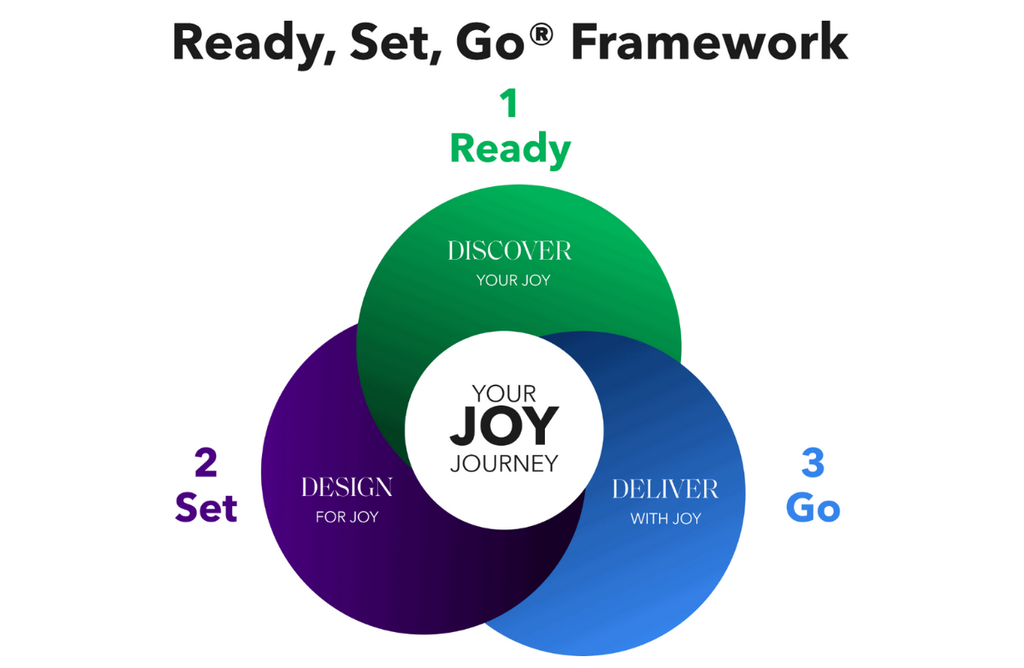
Once you know your authentic self and understand the landscape you lead in, you’re ready for the part where everything gets real. This is the Go stage of Ready, Set, Go®, where vision turns into execution. Over the next two weeks, we’re going to focus on one piece of that stage: setting goals that align your vision and your actions. This week is about identifying goals that fit who you are. Next week, we’ll make them sharper and talk about following through.
Starting with Strengths
When I first stepped into leading a training team, one of the first things I did was sit down with each team member individually. Before I could decide how we were going to move forward as a team, I wanted to understand the people who would help us get there.
I wanted to know: What are you great at? What energizes you? Where do you want to grow inside this organization?
Those conversations weren’t a formality. They became the blueprint for how we worked.
As I learned more about each person, I began to see opportunities I wouldn’t have seen by looking only at job descriptions. We could build our plans around the strengths already in the room and connect those strengths to what the organization needed from us.
The organizational goals didn’t change. What changed was how we pursued them.
That experience reinforced something I still believe and teach today: A goal on paper means very little if it isn’t connected to the person who has to carry it.
Alignment from the Inside Out
Setting a goal is often the easy part. Acting on it is different. Sometimes the gap isn’t discipline. It’s alignment. When a goal doesn’t reflect who we are, every step toward it can feel like pushing a boulder uphill.
I often talk about wanting harmonious relationships with the people around us. That starts with a harmonious relationship with ourselves. When we’re honest about who we are, we create a clearer vision, and that clarity shapes better decisions. Every step becomes intentional and focused on the life we’ve envisioned rather than a reaction to whatever shows up on the calendar.
The approach I use sits right in the middle of the intersection between who you are and what you do. In The Joyful Leader®, I describe it as three overlapping circles: resilience, mental wellness, and productivity. They’re interconnected. Resilience drives mental wellness, which in turn fuels productivity. In the Go stage, those three overlap more than anywhere else, because this is where inner work finally meets outer results.
As leaders, there’s another layer. When we align our actions with our authentic selves and with the vision of our organizations, we create the foundation for meaningful and sustained success. That doesn’t mean everyone does whatever feels authentic. The organizational outcome stays clear. What we design is the route. Know the destination. Understand your people. Build the path using the strengths available to you.
When leaders work this way, their teams see it. Colleagues learn that their strengths have a place in the organization’s vision, and that’s how alignment scales from one leader to a team, a department, and an organization.
Three Steps
Setting goals that align your vision and actions can feel daunting, but it comes down to three main steps:
- Identify your goals.
- Design a smarter version of each goal using the KEANEST Elements™.
- Follow up on that goal.
This week, we’re focusing on the first step. Next week, we’ll break down exactly what makes a goal KEANEST and how to follow through once it’s set. We start here because if the goal itself isn’t aligned, no amount of refinement or tracking will make it sustainable.
Identifying Your Goals
You’ve already done more of this work than you might realize. In the Ready stage, you discovered yourself: your strengths, your values, and what brings you joy. In the Set stage, you designed your landscape: your relationships, your mentors, and the environment you lead in. Now you get to use all of it.
The question in the Go stage isn’t “What could I want?” It’s “Which goals fit who I already know I am, and which ones am I willing to act on?” Your goals should resonate with your values, ignite your creativity, and challenge you to grow. Here are some prompts to work through:
- What matters most to you right now, and what brings you real fulfillment?
- Picture your ideal life in 5, 10, or 20 years. What are the key elements that define success for you?
- Where are the gaps between where you are and where you want to be? Those gaps are your growth areas.
- What are you good at and genuinely enjoy? How could your goals put those strengths to work?
- Looking back at what you discovered in the Ready stage, which goals on your current list don’t reflect who you are anymore?
- Which goal would you still pursue if no one were watching or keeping score?
Once you’ve answered these, break your vision into a short list of specific goals that connect to your long-term impact. Keep the list honest. Three aligned goals will take you further than ten borrowed ones.
Aligned Goals in Practice
An aligned goal sounds like you. A misaligned goal sounds like a job description.
Consider a nurse manager whose greatest strength is teaching. “Improve unit retention” is a fine organizational target, but it doesn’t tell her where her energy goes. “Build a peer-mentoring cadence for new graduates on my unit” puts her teaching strength to work on the same outcome. She’s far more likely to act on it because it feels like hers.
Or take a director who values connection but keeps setting goals around reports and dashboards. The metrics still matter. The aligned version might be “Hold monthly one-on-ones that tie each person’s growth goals to our department priorities.” Same destination, different fuel.
That’s what happened with my training team. The organizational goals stayed the same. We built the path around who each person actually was.
Resilience in the Process
Aligning goals isn’t a one-time exercise, and this is where resilience becomes essential. Demands shift. Priorities change mid-quarter. A well-planned week gets upended by something no one saw coming. Adapting to fluctuating demands without abandoning your values is what keeps an aligned goal alive.
Resilience also shows up in how we see. Being able to look at a situation from different viewpoints, challenge our own assumptions, and stay open to feedback fosters growth. One of the remarkable things about resilience is that it lets you see a situation in its totality. When you take in all the points of view, you gather better feedback, make better decisions, then go deliver on the goal.
As Liza Rossi shared in The Joyful Leader®, tapping into your own joy propels the resilience journey. Aligned goals are one of the clearest ways to do that, because the energy comes from within instead of from pressure.
An aligned goal also isn’t permanent. Carol Dweck has spent decades studying how our beliefs about learning and development influence the way we approach challenges. A growth mindset gives us room to learn, adjust, and continue developing rather than treating our current abilities or circumstances as fixed.
That matters in the Go stage. As we learn more about ourselves and receive new information, we can adjust without interpreting the adjustment as failure. The goal isn’t to cling to an old version of success. It’s to keep moving toward a vision that still reflects who we are and where we’re going.
Before Next Week
Take your list of goals and run each one through a simple test: Does this goal reflect who I am or who I think I’m supposed to be? Keep the ones that pass. Next week, we’ll make them KEANEST and build the follow-through that turns aligned goals into results.
The full goal-setting process, including the KEANEST Elements™ and the follow-through practices we’ll cover next week, lives in Chapter 6 of The Joyful Leader®. Get your copy here: https://nicolevanvalen.com/book/
Want to see where you stand before you set your next goal? Explore The Joyful Leader® Toolkit: https://nicolevanvalen.com/the-joyful-leader-toolkit/