

A growth mindset is a strategic foundation for healthcare leadership. Earth Day offers a timely reminder that system transformation, like growth in nature, is rarely linear, rarely instant, and rarely visible at first. The most resilient health systems grow the way nature does: through cycles, environments, and adaptation, not pressure.
Earth Day Through a Healthcare Leadership Lens
Earth Day is usually framed around environmental stewardship. But for healthcare leaders, it carries a deeper lesson: Growth is a systems phenomenon. Nothing in nature grows in isolation. Roots, soil, climate, and season all interact to determine whether something thrives or stalls. Healthcare works the same way. Clinician well-being, patient outcomes, and organizational performance do not exist independently of environment. Culture is the soil.
And the soil needs tending.
According to the American Medical Association, physician burnout in 2024 fell to 43.2%, its lowest level since the pandemic, down from 53% in 2022. This is meaningful progress, and it reflects what intentional organizational investment can do. It’s also a reminder that burnout remains a structural challenge. Nearly half of physicians still report at least one symptom. According to ATS Scholar, the turnover costs to replace a single physician can reach $400,000 to $500,000, with nurse turnover costs between $50,000 and $70,000 per replacement. The financial, cultural, and clinical cost of not tending to the environment is substantial.
Earth Day reminds us that growth, in nature and in healthcare, depends on the conditions we create.
Why Growth Mindset Is a Healthcare System Strategy
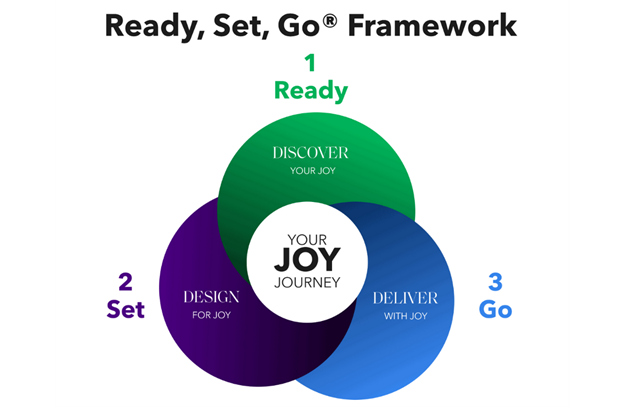
In The Joyful Leader®, I describe three essential elements for developing resilience: a growth mindset, psychological flexibility, and self-awareness.
Carol Dweck’s research shows that people with a growth mindset are more resilient because they believe in the potential for improvement, welcome expansion, and adapt to change. Those with a fixed mindset stay condensed and closed off, with less energy for development.
In healthcare, the distinction is strategic. Fixed-mindset cultures protect turf, avoid hard conversations, and treat setbacks as verdicts. Growth-mindset cultures learn faster, adapt sooner, and sustain performance longer. Recent research in Stress and Health (2025) found that a dual-focused growth mindset, one about both the self and work conditions, measurably boosts employee resilience and well-being. Healthcare leaders who foster this mindset across their teams are building not just culture, but capacity.
As I write in the book, resilience, practiced well, becomes a competitive advantage.
Transformation Starts at the Molecular Level
One of the most clarifying conversations I had while writing the book was with Dr. Thomas Easley, a geneticist, environmental educator, and former inaugural dean at Yale. He offered a framework for transformation I’ve returned to many times since:
“If you want to change how something grows, you break it down to the molecular level, inoculate it with something, let it form into seedlings, and then move it into a different growing environment.”
Dr. Easley applies this framework to biology, to personal transformation, and to institutional change. His reasoning is simple and strategic: Organizations are composed of people. If the people don’t transform at a foundational level, and if the environment doesn’t change to support the new growth, the system reverts.
For healthcare executives, the implications are significant. Surface-level change rarely produces lasting results. Wellness rooms and resilience webinars, while valuable, cannot fix structural issues alone. Real transformation requires a shift at the belief and the mindset levels, coupled with environmental redesign: workflow, staffing models, leadership behaviors, and the cultural signals that determine whether clinicians feel safe enough to grow.
Dr. Easley also offered a companion metaphor that belongs in every health system’s leadership playbook: “Tend to people like a garden.”
Psychological Flexibility as a Healthcare Capability

In The Joyful Leader®, psychological flexibility is defined by four distinct skills:
- Adapting to fluctuating demands
- Reconfiguring mental resources
- Shifting perspectives
- Balancing competing priorities
For healthcare leaders, these are daily requirements, not occasional ones. Shift changes, acuity surges, regulatory pivots, and workforce dynamics demand constant recalibration. Teams that develop psychological flexibility outperform teams that don’t, especially under compression.
Nikki Spoelstra, whose insights helped inform the book, emphasizes that intention and mindset are crucial in high-pressure situations. In healthcare, this observation translates directly: Leaders who model psychological flexibility create teams that flex without fracturing, which is precisely what a high-acuity environment requires.
Growth Requires Letting Go
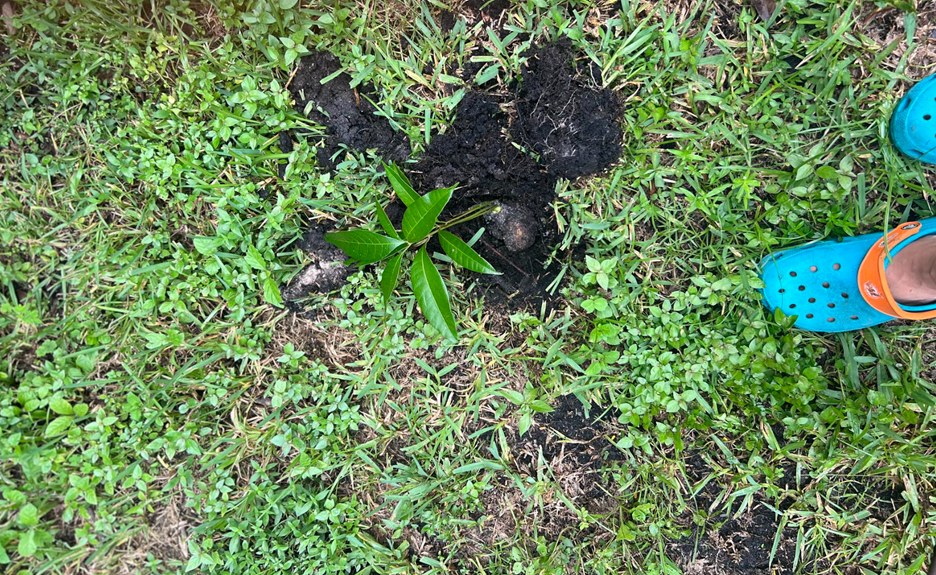
In the book, I describe watching my papaya tree after a Florida rainstorm. As the tree grows, it sheds yellow leaves at its base. Those fallen leaves decompose into fertilizer that nurtures the tree itself. The tree’s growth and its release are part of the same process.
Letting go is a natural part of growth.
For health systems, this principle applies to legacy workflows, outdated escalation structures, and expectations of heroism that have historically defined clinical leadership. Harvard Business Review notes that a growth-at-all-costs mindset, divorced from human sustainability, stalls organizations. The alternative is a model in which organizational health and individual well-being reinforce each other.
Mercedes Martin has spoken eloquently about the need for a human-centered approach to leadership development, one rooted in intentional actions, mindfulness, and joy. In healthcare, that philosophy creates the conditions for real growth, because clinicians grow best where they feel tended, not depleted.
Post-Traumatic Growth in Healthcare
Healthcare leaders know adversity intimately. The pandemic years stretched clinicians, teams, and systems in unprecedented ways. And yet, within many organizations, those years also produced something researchers call post-traumatic growth, or PTG, the phenomenon of meaningful personal and organizational development that can emerge from difficulty.
As research in Frontiers in Psychology notes, PTG doesn’t erase the hardship. It coexists with it. And it reminds leaders that there is always room for growth, no matter the season.
I’ll explore the stress-performance dynamic in depth in next month’s series. For now, one insight stands: Resilient health systems don’t wait for ideal conditions. They grow through the conditions they have.
The Data Behind Joy and Growth
The research is remarkably consistent. A study presented in Applied Psychology: Health and Well-Being (2023) found that engaging in leisure activities promotes mental health through resilience, with positive emotions from leisure expanding our mental resources for coping with stress. Hobbies reduce stress, strengthen resilience, heighten creativity, and improve performance, and social hobbies do more for well-being than solo ones. Research in the Journal of Epidemiology and Community Health (2023) found that creative leisure activities measurably improve life satisfaction and reduce symptoms of anxiety and depression. Online activities, at the bottom of the leisure ranking, bring the least joy of nearly any activity studied.
Our Keane Insights® LinkedIn poll series reinforced these findings with leaders across industries, including healthcare:
- 40% of leaders identified social interactions as their top source of joy at work.
- 67% said joyful activities outside of work significantly improve their workplace performance and resilience.
- 65% named team morale and engagement as the most meaningful ways to measure the impact of joy on productivity.
For healthcare executives, these findings reinforce what leading systems are beginning to operationalize: Flexible scheduling, protected recovery time, peer connection, and leadership coaching are not perks. They are performance levers.
Four Leadership Practices for Healthcare Growth
- Design the clinical environment intentionally. Culture is the soil. Make sure it can support the growth you want from your clinicians and your teams.
- Invest in mindset, not just training. Compliance education teaches tasks. Mindset shifts sustain transformation.
- Protect psychological flexibility at every level. Build in structured space for pause, reflection, and recalibration, from the bedside to the boardroom.
- Tend to people like a garden. Growth follows care, clarity, and consistency, not pressure.
Growth Is the System’s Most Important Asset
In The Joyful Leader®, I reflect that it all comes down to growth. The research supports it. The healthcare leaders I advise experience it. And Earth Day reminds us of it every April.
Resilient healthcare systems understand that growth is not a metric. It’s a mindset, a practice, and a culture. When healthcare leaders design for growth at the molecular level, when they create environments where clinicians and teams can actually thrive, performance follows. So does the joy that makes sustainable healthcare leadership possible.
You may also enjoy:
The Leadership Resilience Gap: Why Joy Is a Performance Strategy in Healthcare
Spring Into Joy: How Growth and Resilience Shape Leadership
A growth mindset is a strategic foundation for healthcare leadership. Earth Day offers a timely reminder that system transformation, like growth in nature, is rarely linear, rarely instant, and rarely visible at first. The most resilient health systems grow the way nature does: through cycles, environments, and adaptation, not pressure.
Earth Day Through a Healthcare Leadership Lens
Earth Day is usually framed around environmental stewardship. But for healthcare leaders, it carries a deeper lesson: Growth is a systems phenomenon. Nothing in nature grows in isolation. Roots, soil, climate, and season all interact to determine whether something thrives or stalls. Healthcare works the same way. Clinician well-being, patient outcomes, and organizational performance do not exist independently of environment. Culture is the soil.
And the soil needs tending.
According to the American Medical Association, physician burnout in 2024 fell to 43.2%, its lowest level since the pandemic, down from 53% in 2022. This is meaningful progress, and it reflects what intentional organizational investment can do. It’s also a reminder that burnout remains a structural challenge. Nearly half of physicians still report at least one symptom. According to ATS Scholar, the turnover costs to replace a single physician can reach $400,000 to $500,000, with nurse turnover costs between $50,000 and $70,000 per replacement. The financial, cultural, and clinical cost of not tending to the environment is substantial.
Earth Day reminds us that growth, in nature and in healthcare, depends on the conditions we create.
Why Growth Mindset Is a Healthcare System Strategy
In The Joyful Leader®, I describe three essential elements for developing resilience: a growth mindset, psychological flexibility, and self-awareness.
Carol Dweck’s research shows that people with a growth mindset are more resilient because they believe in the potential for improvement, welcome expansion, and adapt to change. Those with a fixed mindset stay condensed and closed off, with less energy for development.
In healthcare, the distinction is strategic. Fixed-mindset cultures protect turf, avoid hard conversations, and treat setbacks as verdicts. Growth-mindset cultures learn faster, adapt sooner, and sustain performance longer. Recent research in Stress and Health (2025) found that a dual-focused growth mindset, one about both the self and work conditions, measurably boosts employee resilience and well-being. Healthcare leaders who foster this mindset across their teams are building not just culture, but capacity.
As I write in the book, resilience, practiced well, becomes a competitive advantage.
Transformation Starts at the Molecular Level
One of the most clarifying conversations I had while writing the book was with Dr. Thomas Easley, a geneticist, environmental educator, and former inaugural dean at Yale. He offered a framework for transformation I’ve returned to many times since:
“If you want to change how something grows, you break it down to the molecular level, inoculate it with something, let it form into seedlings, and then move it into a different growing environment.”
Dr. Easley applies this framework to biology, to personal transformation, and to institutional change. His reasoning is simple and strategic: Organizations are composed of people. If the people don’t transform at a foundational level, and if the environment doesn’t change to support the new growth, the system reverts.
For healthcare executives, the implications are significant. Surface-level change rarely produces lasting results. Wellness rooms and resilience webinars, while valuable, cannot fix structural issues alone. Real transformation requires a shift at the belief and the mindset levels, coupled with environmental redesign: workflow, staffing models, leadership behaviors, and the cultural signals that determine whether clinicians feel safe enough to grow.
Dr. Easley also offered a companion metaphor that belongs in every health system’s leadership playbook: “Tend to people like a garden.”
Psychological Flexibility as a Healthcare Capability
In The Joyful Leader®, psychological flexibility is defined by four distinct skills:
- Adapting to fluctuating demands
- Reconfiguring mental resources
- Shifting perspectives
- Balancing competing priorities
For healthcare leaders, these are daily requirements, not occasional ones. Shift changes, acuity surges, regulatory pivots, and workforce dynamics demand constant recalibration. Teams that develop psychological flexibility outperform teams that don’t, especially under compression.
Nikki Spoelstra, whose insights helped inform the book, emphasizes that intention and mindset are crucial in high-pressure situations. In healthcare, this observation translates directly: Leaders who model psychological flexibility create teams that flex without fracturing, which is precisely what a high-acuity environment requires.
Growth Requires Letting Go
In the book, I describe watching my papaya tree after a Florida rainstorm. As the tree grows, it sheds yellow leaves at its base. Those fallen leaves decompose into fertilizer that nurtures the tree itself. The tree’s growth and its release are part of the same process.
Letting go is a natural part of growth.
For health systems, this principle applies to legacy workflows, outdated escalation structures, and expectations of heroism that have historically defined clinical leadership. Harvard Business Review notes that a growth-at-all-costs mindset, divorced from human sustainability, stalls organizations. The alternative is a model in which organizational health and individual well-being reinforce each other.
Mercedes Martin has spoken eloquently about the need for a human-centered approach to leadership development, one rooted in intentional actions, mindfulness, and joy. In healthcare, that philosophy creates the conditions for real growth, because clinicians grow best where they feel tended, not depleted.
Post-Traumatic Growth in Healthcare
Healthcare leaders know adversity intimately. The pandemic years stretched clinicians, teams, and systems in unprecedented ways. And yet, within many organizations, those years also produced something researchers call post-traumatic growth, or PTG, the phenomenon of meaningful personal and organizational development that can emerge from difficulty.
As research in Frontiers in Psychology notes, PTG doesn’t erase the hardship. It coexists with it. And it reminds leaders that there is always room for growth, no matter the season.
I’ll explore the stress-performance dynamic in depth in next month’s series. For now, one insight stands: Resilient health systems don’t wait for ideal conditions. They grow through the conditions they have.
The Data Behind Joy and Growth
The research is remarkably consistent. A study presented in Applied Psychology: Health and Well-Being (2023) found that engaging in leisure activities promotes mental health through resilience, with positive emotions from leisure expanding our mental resources for coping with stress. Hobbies reduce stress, strengthen resilience, heighten creativity, and improve performance, and social hobbies do more for well-being than solo ones. Research in the Journal of Epidemiology and Community Health (2023) found that creative leisure activities measurably improve life satisfaction and reduce symptoms of anxiety and depression. Online activities, at the bottom of the leisure ranking, bring the least joy of nearly any activity studied.
Our Keane Insights® LinkedIn poll series reinforced these findings with leaders across industries, including healthcare:
- 40% of leaders identified social interactions as their top source of joy at work.
- 67% said joyful activities outside of work significantly improve their workplace performance and resilience.
- 65% named team morale and engagement as the most meaningful ways to measure the impact of joy on productivity.
For healthcare executives, these findings reinforce what leading systems are beginning to operationalize: Flexible scheduling, protected recovery time, peer connection, and leadership coaching are not perks. They are performance levers.
Four Leadership Practices for Healthcare Growth
- Design the clinical environment intentionally. Culture is the soil. Make sure it can support the growth you want from your clinicians and your teams.
- Invest in mindset, not just training. Compliance education teaches tasks. Mindset shifts sustain transformation.
- Protect psychological flexibility at every level. Build in structured space for pause, reflection, and recalibration, from the bedside to the boardroom.
- Tend to people like a garden. Growth follows care, clarity, and consistency, not pressure.
Growth Is the System’s Most Important Asset
In The Joyful Leader®, I reflect that it all comes down to growth. The research supports it. The healthcare leaders I advise experience it. And Earth Day reminds us of it every April.
Resilient healthcare systems understand that growth is not a metric. It’s a mindset, a practice, and a culture. When healthcare leaders design for growth at the molecular level, when they create environments where clinicians and teams can actually thrive, performance follows. So does the joy that makes sustainable healthcare leadership possible.
You may also enjoy:
The Leadership Resilience Gap: Why Joy Is a Performance Strategy in Healthcare